
By Mike Kern | MGK Pools Inc | 30+ Years Experience | CPO Certified | MA Contractor License #191300
I am your DIY inground above ground pool specialist. I’ve been installing pools for over 30 years, and over the last 10 years I’ve carved out a niche doing exactly this.
Here’s what most pool companies won’t tell you: if they install inground pools, they’ll say you can’t bury an above ground pool. If they sell above ground pools, they’ll say you can bury any of them. As usual, the truth is somewhere in the middle.
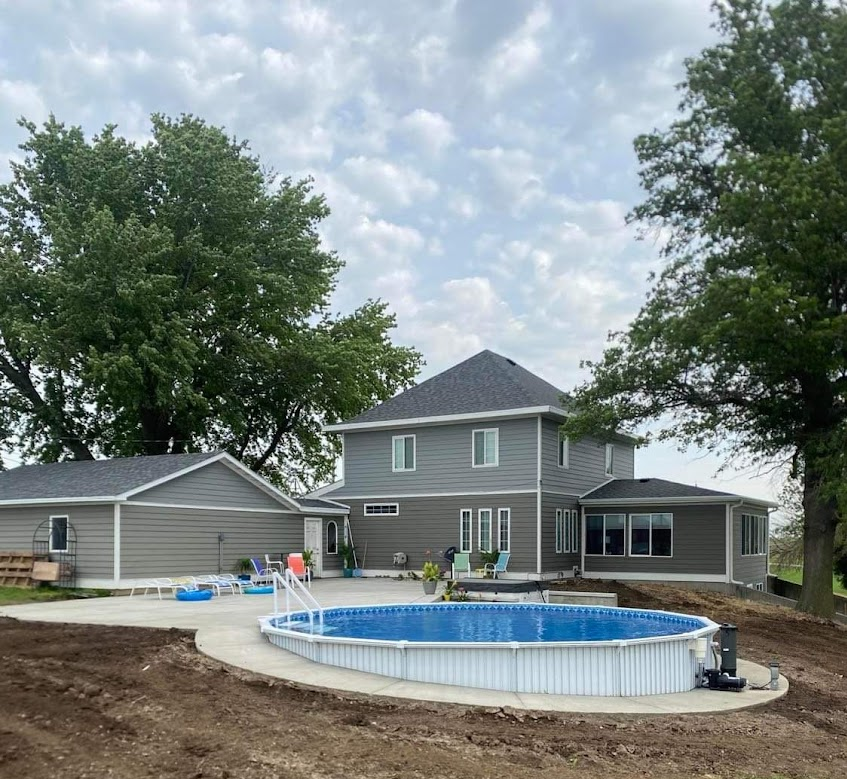
I’ll tell you: you can get the inground look with a specific type of above ground pool, buried in the ground, for a fraction of the cost. I’m talking $10,000–$20,000 total versus six figures. And depending on how handy you are, you can do a lot of the work yourself.
I’m not talking about some hack job with a cheap pool from a big-box store shoved in a hole. That’s a disaster waiting to happen (and I’ve been called out to fix those disasters). I’m talking about hybrid pools designed to be buried (the industry calls them semi-inground pools) — pools I’ve personally installed hundreds of times. Pools you can install legally and fully inground.
If you’re trying to decide between a traditional inground pool and something more budget-friendly, I wrote a full breakdown of vinyl, fiberglass, and cement pools and what an expert would actually buy. But if you already know the inground price tag isn’t in the cards, keep reading. This guide is for you.
Can You Actually Bury an Above Ground Pool?
Let me be blunt: most above ground pools cannot be buried. If you try, you’re going to have a very bad and very expensive day.
Here’s the analogy I use. Think of a soda can. When it’s full (sealed, pressurized), you can stand on it. The outward pressure keeps it rigid. But push on it from the outside? It crumples. That’s exactly what happens with a standard above ground pool buried in the ground. The pool walls are designed to handle water pushing OUT. They are not designed to handle thousands of pounds of earth pushing IN.
A typical above ground pool has a thin rolled steel or aluminum wall — one continuous sheet about .019 to .024 inches thick. It relies entirely on the outward water pressure for structural integrity. Bury that pool two feet down, and the ground pressure can buckle the wall, collapse the structure, and destroy your liner. I’ve seen it happen, and it’s not pretty.
PRO TIPS: If You’re Set on Burying a Standard Above Ground Pool
Fill the pool with water before backfilling the outside. The water pressure pushing out needs to be in place before the earth pressure pushing in. Do it out of order and you risk buckling the wall.
Use a cement slurry or loose grout-type mix for backfill — not dirt. Regular soil will settle, shift, and eventually cave in against your pool wall. A cement slurry hardens in place and won’t move when you need to replace the liner down the road.
Don’t bury the skimmer and return. Inground pools have special skimmers and returns that won’t fit your above ground pool. Keep them accessible above the backfill line.
If you have an above ground pump, it won’t work below the water line. Stubborn people (like me) learn this the hard way. If your pump ends up sitting below the water level after burial, you need an inground-rated pump that’s designed for that plumbing setup.
One last thing: if you’re backfilling all the way up to the top rail, duck tape the gap between the top of the pool wall and the top rail first. Keeps backfill material from getting inside the pool behind the liner. Small step, big headache avoided.
So which pools CAN be buried?
You need a pool specifically engineered for semi-inground or full inground installation. These pools have thicker, interlocking wall panels (not a single rolled sheet), reinforced frames, and construction rated to handle earth pressure from the outside. They cost more than a standard above ground pool, but dramatically less than a traditional inground.
If you’re just starting your research into what makes a quality above ground pool in general, my above ground pool buyers guide breaks down everything you need to know about wall types, frame materials, and what separates the good from the garbage.
The Right Pool for the Job
After 30 years of installing every brand you can name, I sell two pools that I trust to go in the ground: the Aquasport 52 and the Fox Ultimate.
Here’s something most people don’t realize — most towns will actually issue a building permit for these pools, just like a traditional inground. Try getting a permit for a standard above ground pool buried in a hole. Good luck.
The Aquasport 52
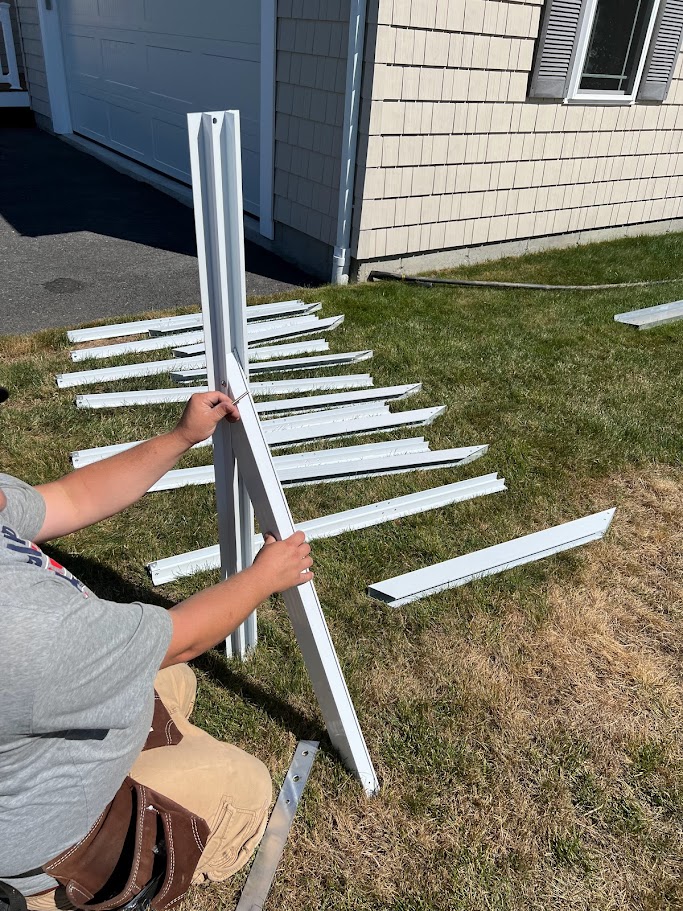
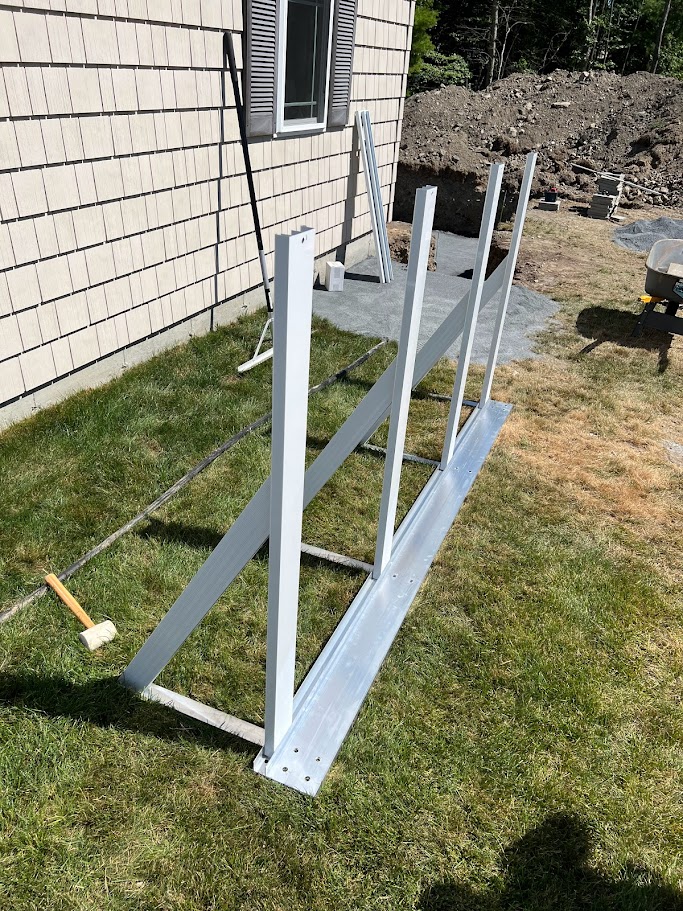
The Aquasport 52 is my flagship for a reason. This pool is built with interlocking aluminum panels — not a rolled wall. The hardware is as fat as your index finger. You can install it completely above ground, partially buried, or fully inground. Same pool, three installation methods.
Here’s the kicker: the Aquasport 52 does not require a cement collar at the base. Most semi-inground pools (Radiant, Optimum, etc.) need you to pour a 12″x18″ concrete footing around the entire bottom track before you can backfill. That adds $2,000–$4,000 and several days to your project. The Aquasport 52’s construction is strong enough that you can backfill directly against it.
That’s a massive advantage for a DIY project. No concrete = less specialized work = more you can handle yourself.
- Interlocking aluminum panels, hardware as fat as your finger
- No cement collar needed (big advantage)
- Inground skimmer option (completes the inground look)
The Fox Ultimate
The Fox Ultimate is another premium option that can be buried. It comes in rounds, ovals, Grecian, and rectangle shapes — so if you want something other than a standard round or oval, this is your pool. Same rock-solid construction philosophy.
I go deep on both of these models (and how they stack up against every other semi-inground pool on the market) in my semi-inground pool buyers guide. If you want the full comparison before deciding, start there.
For smaller yards, I also wrote a specific guide on small backyard semi-inground pools — because sometimes it’s not just about cost, it’s about fitting a real pool into a tight space.
What “DIY” Really Means for This Project
Let me be straight with you. When I say “DIY inground above ground pool,” I don’t mean you’re going to knock this out in a Saturday afternoon with a shovel and a six-pack. Burying a pool is significantly more involved than a standard above ground install.
Here’s what the project actually looks like, broken into what you can realistically do yourself versus what you might want to hire out:
What a Handy Homeowner Can Do
Site preparation and layout. Marking the pool location, checking grades, calling 811 (dig-safe) for utility marking. This is all you.
Pool assembly. The Aquasport 52 goes together with interlocking panels, not a rolled wall. One person can build it (I have), but it’s much easier with a helper. Every customer who buys this pool from me gets my personal cell number for installation support. I walk people through it all the time.
Plumbing and equipment setup. Connecting the pump, filter, skimmer, and return lines. If you can handle basic PVC plumbing (and it really is basic), you can do this.
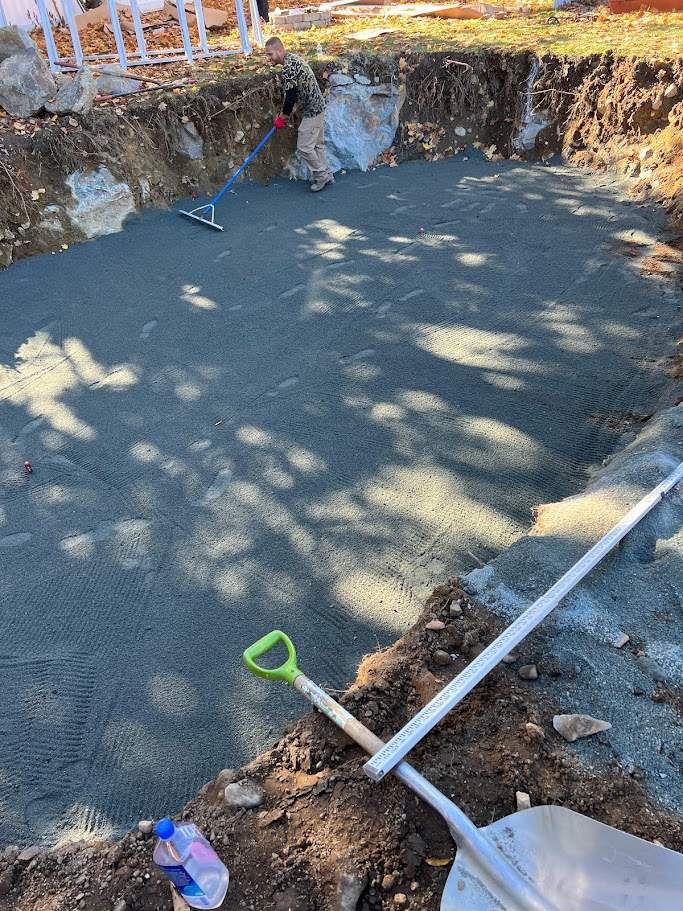
Backfilling. Once the pool is assembled and the walls are in place, backfilling around the pool is straightforward physical labor. Use clean fill — no rocks, no organic material. Compact in lifts (layers).
Liner installation. Hanging the liner, getting the wrinkles out, filling with water. Takes patience more than skill.
I put together a full above ground pool installation guide that walks you through the general process. For buried pools, everything in that guide still applies — you just have the added excavation step before assembly.
What You Probably Want to Hire Out
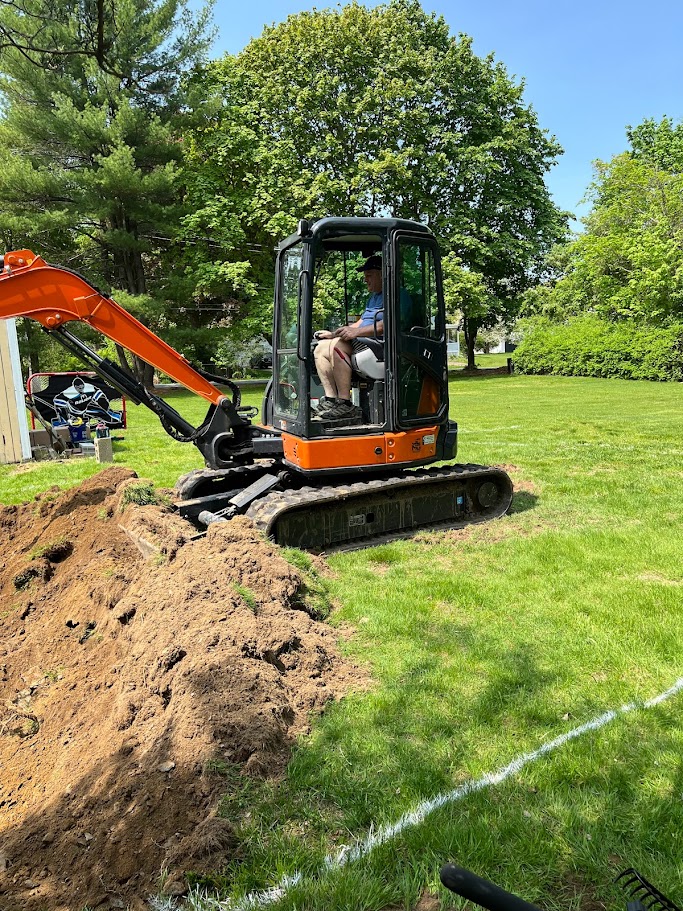
Excavation. This is the big one. Digging a hole large enough for a 15×30 or 24-round pool, 3–4 feet deep, with proper drainage grading, is a serious earthmoving job. You need a mini excavator or skid steer at minimum. Can you rent one and do it yourself? Sure, if you’re comfortable operating equipment. Many of my customers hire a local excavation landscaper for this part ($2,500–$4,000) and do the rest themselves.
Electrical work. By code, your pool electrical needs to be done by a licensed electrician. Period. Don’t DIY this.
Permits. You’ll need to pull permits (building, electrical, and possibly plumbing depending on your town). I provide documentation, but the homeowner handles the actual permitting process. Here in Massachusetts they won’t issue me a pool permit until an electrician has pulled one for the job.
PRO TIP
Here’s what I tell customers: hire the excavation, do the assembly and backfill yourself, and hire the electrician (perhaps do your own bonding work). That’s the sweet spot where you save the most money while keeping the project safe and to code. If you’re local to Massachusetts, southern New Hampshire, Rhode Island, eastern Connecticut, or southern Maine, my crew handles all of this — check out our pool installation services page for details.
Real Cost Breakdown: DIY Inground AG Pool vs. True Inground
This is the section that changes people’s minds. Let’s look at real numbers.
Option 1: DIY Inground Above Ground Pool (Aquasport 52)
| Item | Cost Range |
|---|---|
| Aquasport 52 pool kit (24′ round, with liner) | $7,000–$7,500 |
| Pump, filter, equipment package | $700–$1135 |
| Inground skimmer upgrade | $279 |
| Excavation (hired out) | $2,500–$4,000 |
| Backfill material (clean fill, compactable) | $500–$1,500 |
| Electrical (licensed electrician) | $1,500–$2,500 |
| Pool bonding kit | $209–$945 (above ground vs inground) |
| Permits | $200–$500 |
| Coping / patio / decking (varies wildly) | $2,000–$8,000 |
| TOTAL | $15,000–$25,000 |
Option 2: True Inground Pool (Professionally Installed)
| Type | Typical Cost |
|---|---|
| Vinyl liner inground | $40,000–$60,000 |
| Fiberglass inground | $50,000–$80,000 |
| Gunite / concrete | $80,000–$150,000 |
The Math
A buried Aquasport 52 with decent coping and patio work comes in at roughly $15,000–$25,000. A comparable vinyl liner inground pool starts at $40,000. Fiberglass starts at $50,000. Gunite? Don’t even ask.
You’re saving $25,000–$125,000. And honestly? When it’s done — with stone coping, a deck, some landscaping — your neighbors won’t know the difference. I have install photos to prove it.
Want to see exactly what your pool package would cost? Our pool package customizer lets you build a complete Aquasport 52 package with your choice of pump, filter, liner, and accessories. Equipment in a pool package ships free and is priced at our cost.
If after reading all this you decide you actually do want a true fiberglass inground pool, I sell those too — check out our fiberglass pool page for shells from four different manufacturers.
Don’t Skip the Bonding (Seriously)
Here’s something a lot of DIYers miss, and it’s not optional — it’s code.
NEC 680.26 requires equipotential bonding on every pool. Inground, above ground, buried, doesn’t matter. Every piece of metal within five feet of the pool water must be bonded with #8 solid bare copper wire. No bonding = failed electrical inspection. Period.
Here’s my analogy: think of a bird sitting on a power line. It doesn’t get shocked because there’s no difference in electrical potential between its two feet. Pool bonding creates that same equal potential around your entire pool. If something goes wrong electrically, the bonding ensures there’s no voltage difference that could shock a swimmer.
Electricians typically charge $1,800–$3,500 for inground pool bonding. I sell a complete inground pool bonding kit pre-sized for your specific pool for $945. Your electrician can install it in about an hour — so you’re paying them one hour of labor instead of a full day job. Even with the kit plus an hour of electrician time, you’re saving $500–$2,000 over having them source everything and do it from scratch.
I’ve written the most detailed pool bonding guide on the internet: How to Bond Above Ground & Inground Pools. Read it. Bookmark it. Send it to your electrician. They’ll thank you.
Equipment Considerations for Buried Pools
When you bury an above ground pool more than about 30 inches, there’s an important equipment change you need to know about.
Standard above ground pool pumps are designed to sit below the water level — gravity helps them prime and move water. When your pool is buried, the pump may end up level with or above the water surface. That means you need an inground-rated pump that can self-prime and pull water up.
I recommend the Pentair 011066 variable speed pump for buried installations. It’s an inground pump that’s incredibly efficient. Compare that to the Speck E71, which is the above ground version — great pump, but not designed for the plumbing geometry of a buried pool.
You can browse all of our pool pumps and pool filters — or better yet, build a complete package on our pool package customizer where equipment is available at our cost when bundled with a pool.
PRO TIP: Run your variable speed pump 22–24 hours a day at low speed instead of 6–8 hours at high speed. Here’s the Affinity Law for dummies: you could walk a mile or run a mile. Running burns more energy. Walking does the same job. Cut pump speed in half and energy consumption drops by roughly 87.5% — not 50%. Variable speed pumps pay for themselves and are actually now required by law (code).
And if you want to know exactly how many gallons your pool holds (critical for chemical dosing and pump sizing), use our pool volume and chemistry calculator.
The Finished Product
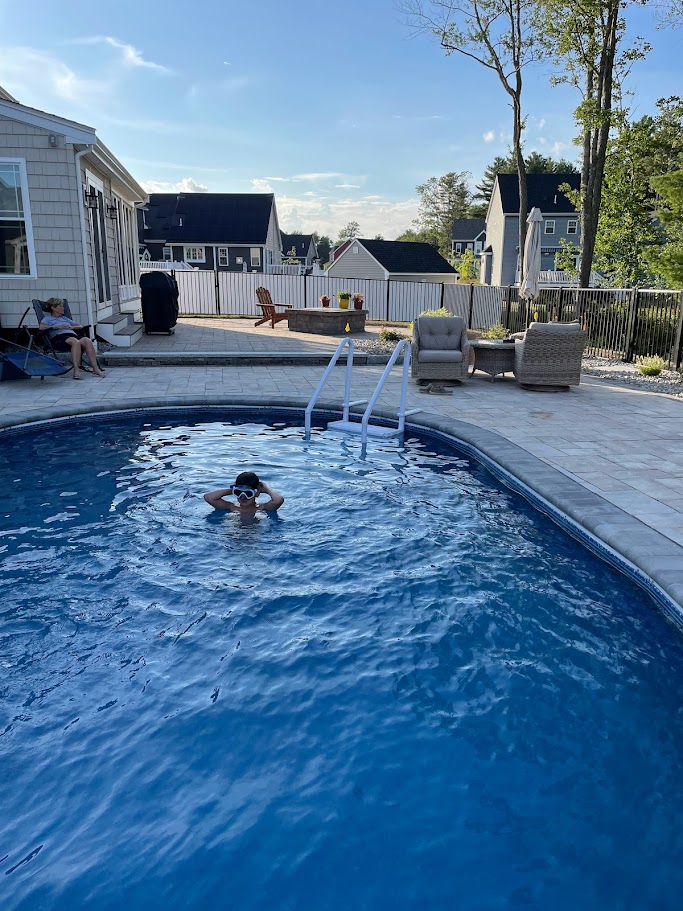
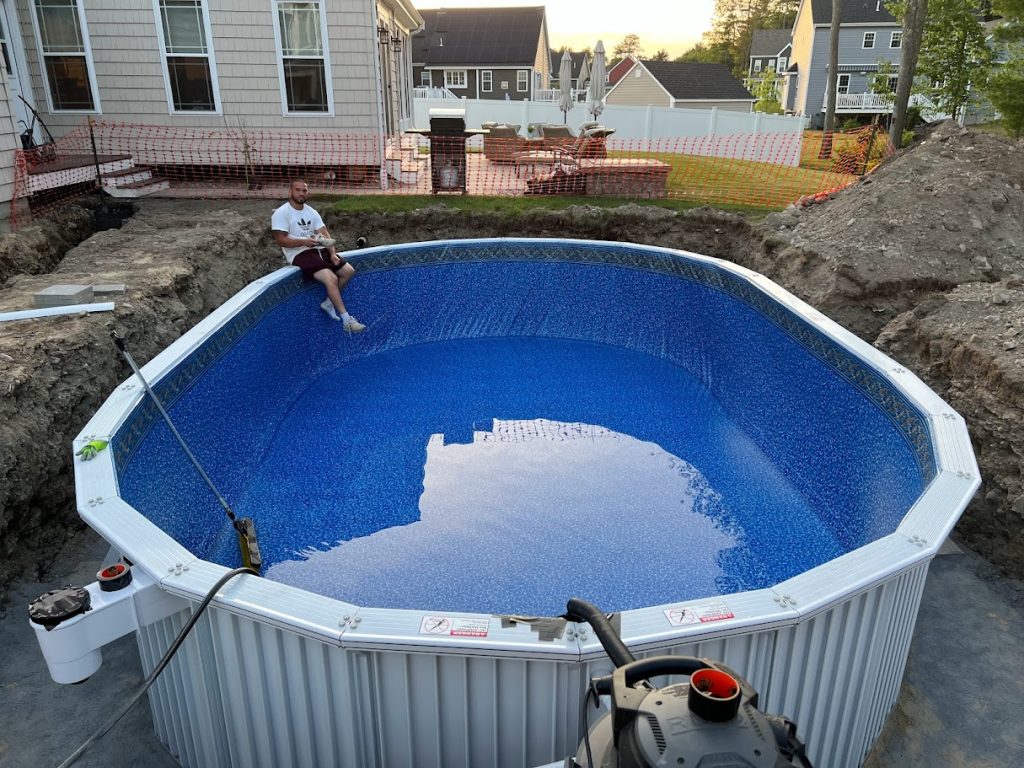
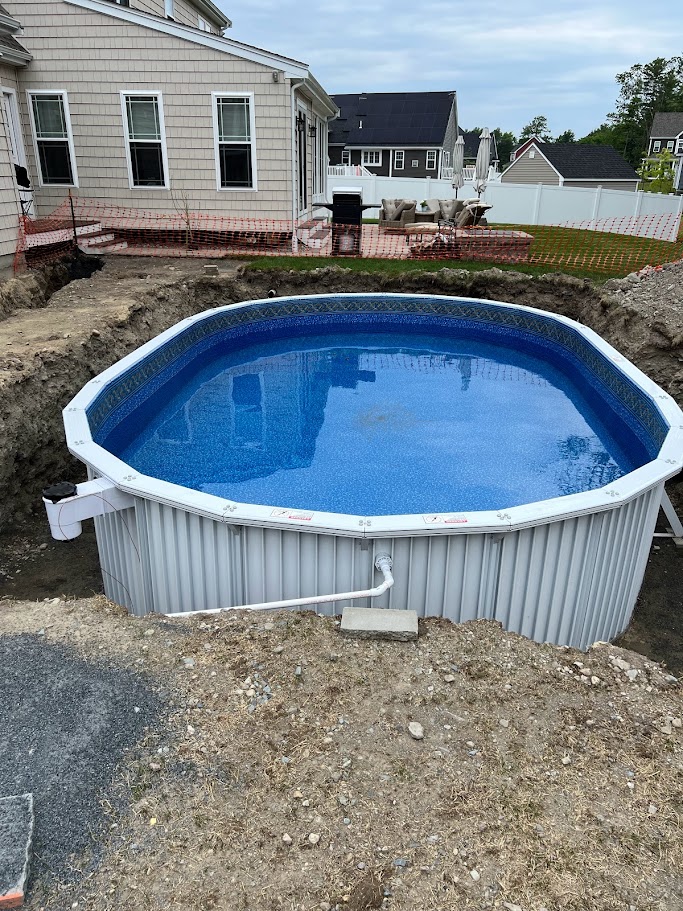
This is what a $15,000–$20,000 pool looks like when it’s done right. Same inground look. Same backyard experience. Fraction of the cost.
I’ve installed over 1,000 pools across New England. No commissioned salespeople — just me, my experience, and my personal cell number. When you buy a pool from MGK, you get a 30-year pool guy in your corner for the life of the pool.
Ready to Get Started?
Build your pool package: Use our pool package customizer to put together an Aquasport 52 with the equipment you need. Pool packages ship free (except West Coast).
Compare your options: Read the best above ground pool reviews to see how the Aquasport 52 stacks up against every other pool on the market. If you’ve been looking at Kayak Pools, check out our Kayak vs. Admiral’s Walk comparison — you might be surprised.
Need installation? If you’re in Massachusetts, Southern New Hampshire, Rhode Island, Eastern Connecticut, or Southern Maine, we install everything we sell. Get a local installation quote.
Have questions? Text or call me directly: (978) 973-6048. No sales team, no call center — just me (Mike). This is my personal cell, I usually don’t give it out until you bought a pool, but I put it here for my DIY people. Text is best to begin.
Frequently Asked Questions
Can I bury any above ground pool?
No. Standard above ground pools with rolled steel walls are not designed to handle earth pressure. You need a pool specifically built for semi-inground or inground installation, like the Aquasport 52 or Fox Ultimate.
Do I need a concrete collar to bury the Aquasport 52?
No — and this is a huge advantage. Most competing semi-inground pools (Radiant, Optimum) require a concrete collar poured around the base. The Aquasport 52’s interlocking aluminum panel construction is strong enough to backfill directly against.
How deep can I bury it?
The Aquasport 52 can be installed completely inground (all 52 inches buried) or partially buried to any depth you choose. Your yard, your call.
Will it look like a real inground pool when it’s done?
Yes. With flush coping, paver or stone patio, and landscaping, there is no visual difference. The pool wall is completely hidden. Guests won’t know unless you tell them.
How long does a buried Aquasport 52 last?
The aluminum panels don’t rust, or rot. With proper care (and a liner replacement every 10–15 years), this pool will last as long as most traditional inground pools.
Do I need an inground pump if I bury it?
If the pool is buried more than abou
Related Reading
- Semi-Inground Pool vs. Inground Pool: Save $30K and Nobody Will Know the Difference
- Semi Inground Pools – What You Need to Know
- Fiberglass vs Vinyl Inground Pools 2026 – Deep Dive Comparison
- Semi Inground Pool Cost 2026 – Real Prices from a 30-Year Installer
- Semi-Inground Pool on a Sloped Yard – What You Need to Know
What about the warranty?
The Aquasport 52 is manufactured by Aquasport Pools LLC (formerly Buster Crabbe Pools) and is warranted for above ground, semi-inground, and full inground installation. Burying it is exactly what it’s designed for.