
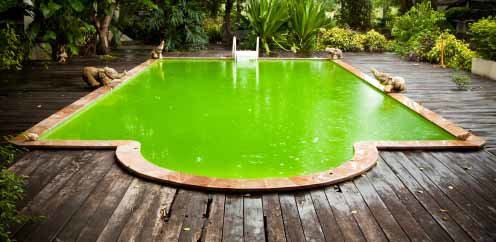
Every article on the internet is going to tell you to shock your pool and run the filter for days. Some of them will have you backwashing your filter four times a day for a week straight. And sure, that works eventually. But after 30 years of cleaning green pools for a living, I can tell you there’s a much faster way.
The secret? Stop trying to filter a dirty pool. Filters are not designed to clean filthy water — they’re designed to maintain clean water. That’s a huge difference, and it’s the reason most people spend two weeks fighting a green pool when I can have it clear in 24 hours.
Here’s the method I’ve used on hundreds of pools. It’s the same process that made my customers think I was a miracle worker. The pool goes from swamp to swim-ready, sometimes overnight.
| 💡 Need to know your pool’s volume? Use our free Pool Volume & Chemistry Calculator to figure out your gallons before you start dosing chemicals. /pool-volume-chemistry-calculator/] |
PRO TIP* Make sure your pH is under control first. High levels of pH destabilize chlorine and make it ineffective. I would hope your CYA (Cyanuric Acid) level is between 30-40ppm at most. High CYA will also render chlorine useless.
Step 1: Shock the Pool
Before you can clean a green pool, you have to kill the algae. And that requires a lot of chlorine. I’m not talking about tossing in a bag of shock from the pool store. I’m talking about liquid chlorine by the gallon.
How Much Chlorine to Shock a Green Pool
If I test the water and there’s no free chlorine present — which there usually isn’t — I add 5 gallons of liquid chlorine per 10,000 gallons of pool water. For a 24-foot round above ground pool (about 13,500 gallons), that’s roughly 7 gallons.
You’ll know you used enough when the green starts to lighten in color within a few hours. If it’s still dark green the next morning, add more. You really can’t over-shock a green pool.
| PRO TIP: Liquid chlorine will raise your pH and alkalinity. If those levels are already high before you start, use granular shock (calcium hypochlorite) instead. And one rule that should be tattooed on every pool owner’s hand: NEVER MIX CHEMICALS. Always add chemicals to water, never water to chemicals. |
Step 2: Brush the Entire Pool
Algae has a slimy protective coating. If you don’t break that coating, the chlorine can’t penetrate and kill it. Brush every surface — walls, floor, steps, behind the ladder, around the skimmer. Get it all mixed into that chlorine.
Any live algae you miss will grow back fast. I’ve seen a pool go from one missed spot on the wall to a full bloom in 48 hours. Don’t skip the brushing.
Step 3: Wait (With the Pump Off)
This is where most people mess up. They shock the pool, brush it, and then immediately turn the pump on to “filter it out.” Wrong.
Turn the pump off. Let all that dead algae settle to the floor. Running the circulation system stirs everything up and keeps the water cloudy. You want a clear layer of water on top and a pile of dead green gunk on the bottom. That’s exactly what you’re going for.
Give it several hours, or better yet, overnight.
Step 4: Vacuum the Pool to Waste
This is the step that separates a 24-hour fix from a 2-week nightmare. And this is the step that 90% of those other “how to clean a green pool” articles leave out.
What Does “Vacuum to Waste” Mean?
Instead of sending all that dead algae through your filter (which will clog it immediately), you bypass the filter entirely and pump the dirty water straight out of the pool — onto the lawn, into the woods, wherever it can drain.
Most multi-port filter valves have a “Waste” setting. Turn it there, and everything you vacuum goes straight out the waste line instead of through the filter media. Simple as that.
My Side-Vac Setup (The Pro Method)
I take it a step further. I bring my own pump and bypass the pool’s plumbing completely. Here’s my exact setup:
Pump: Hayward 1.5 HP Super Pump or Pentair 342001 / 011066. I like the extreme suction power, but you could use a .75 HP or 1 HP. The cool thing about these pumps is that they run on 110V or 220V. I put the jumper on 110V (hayward super pump only) and wire a long extension cord to a waterproof switch right on the side of the pump. This way I can power it off and on quickly when I need to clean debris pot. You can often find cheap used inground style pumps on Craigslist, or pick one up on Amazon.
Vacuum Hose: I-Helix by Haviland — this is the best vacuum hose on the market. I only use it on the suction side. If you drag a cheap hose across cement or rough surfaces, it gets hole and you lose suction. Like trying to drink through a cracked straw. I use a cheaper hoses on the waste/discharge side.
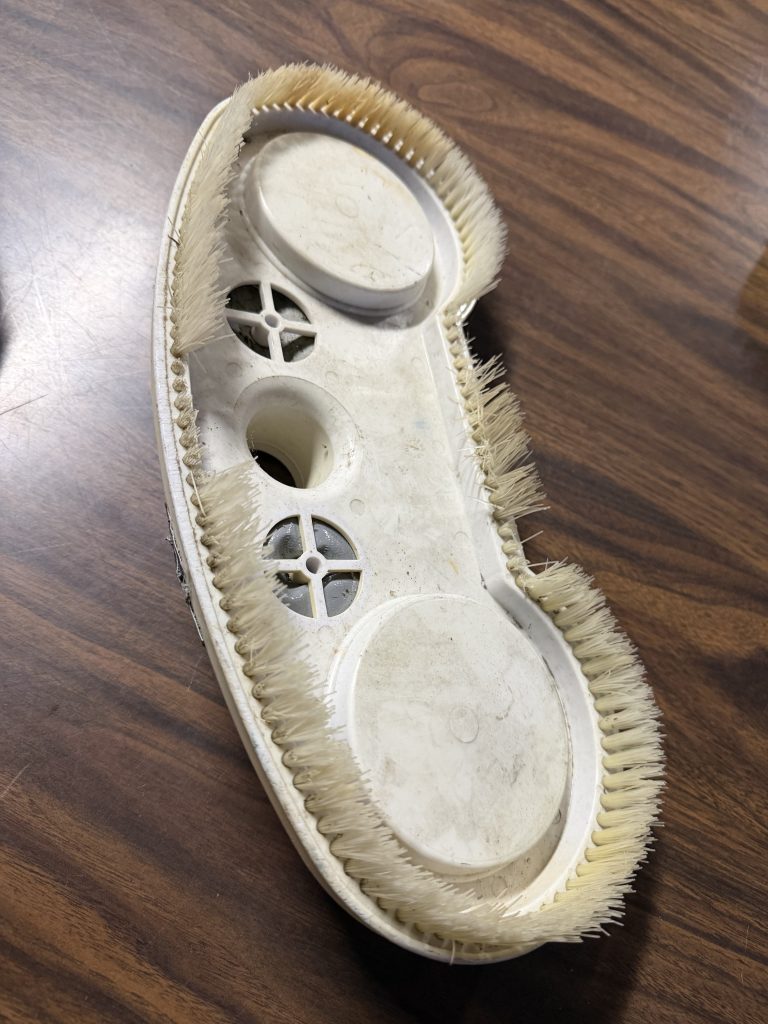
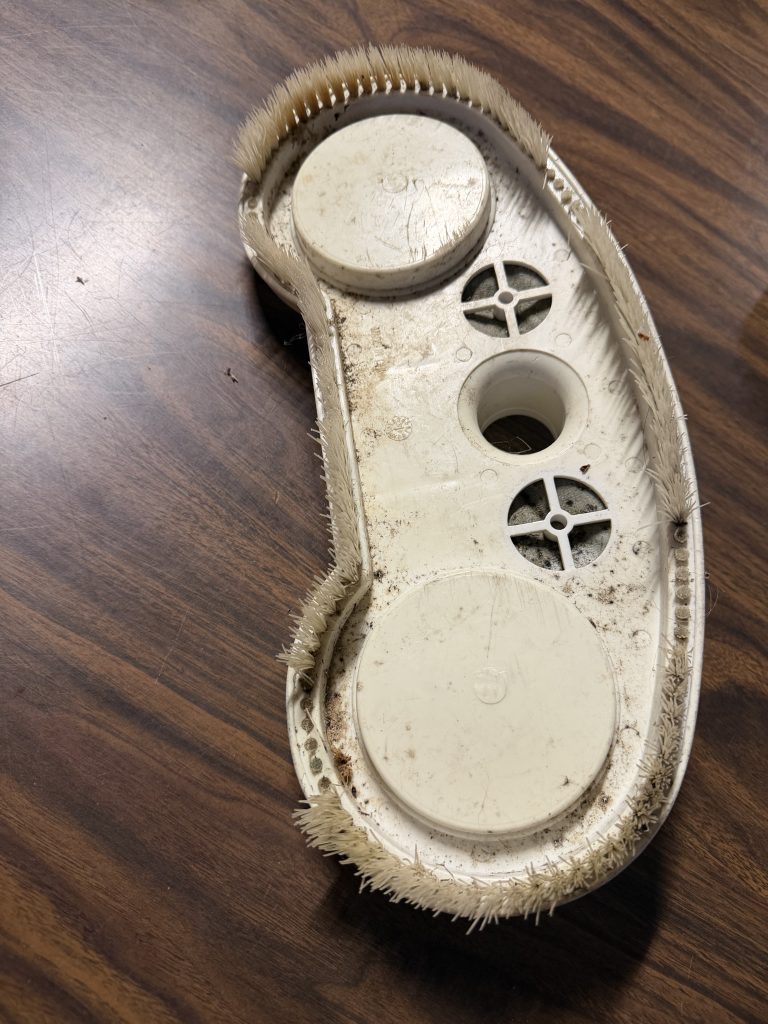
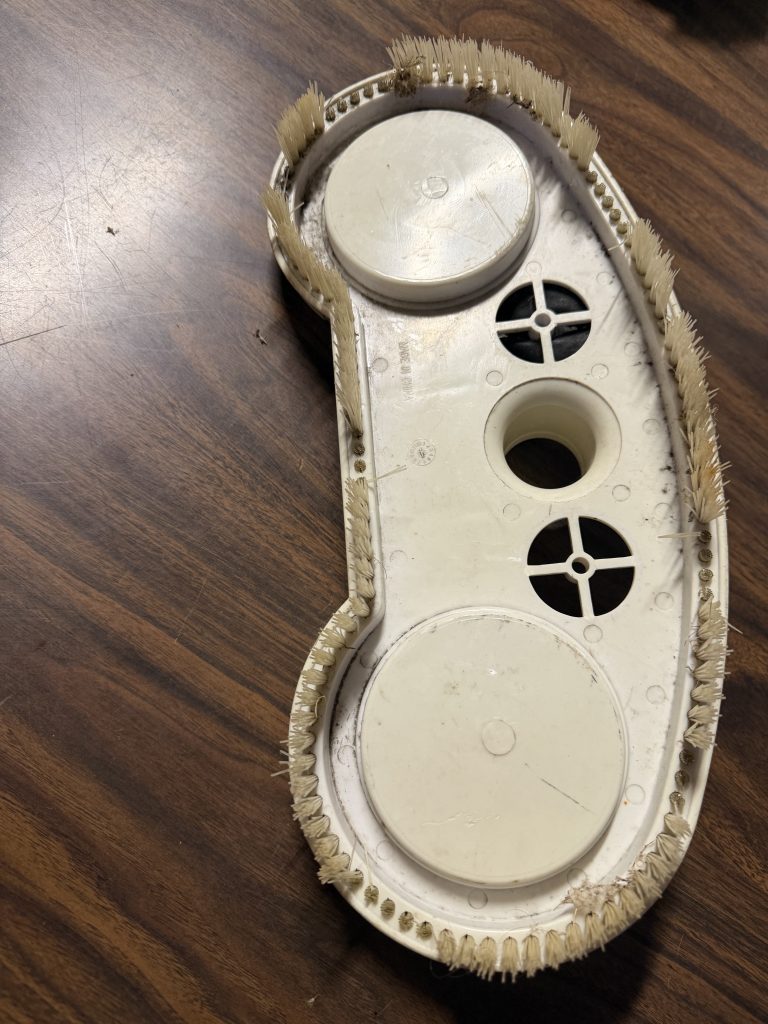
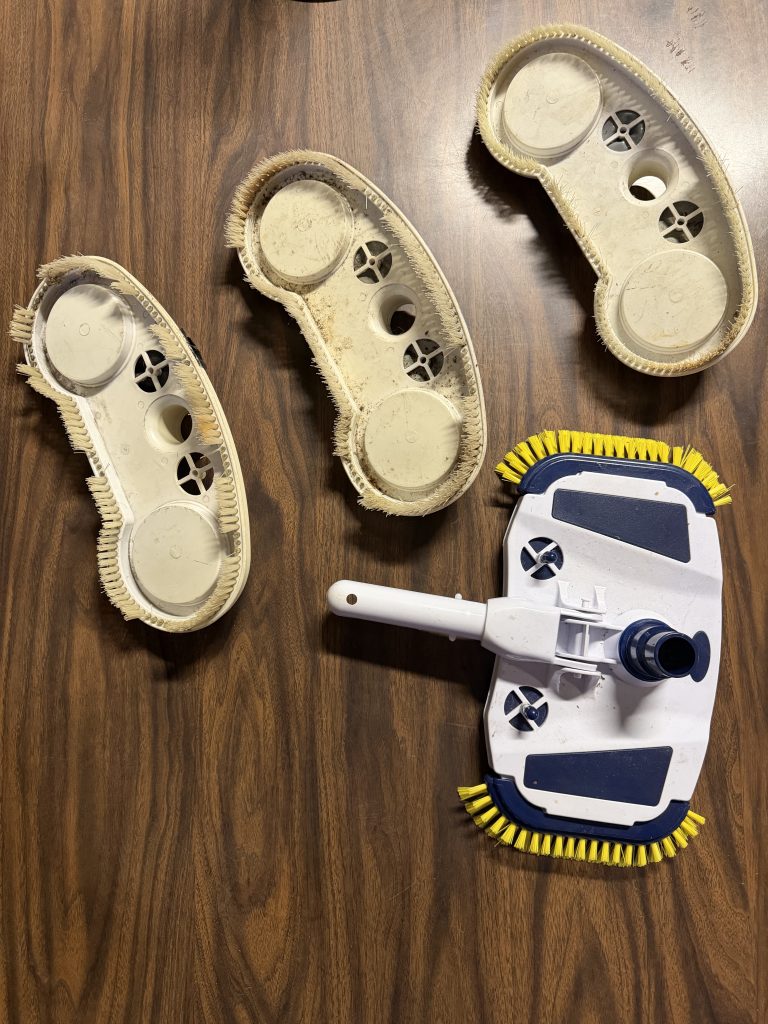
Vacuum Head: I use one with bristles and relief valves. Here’s a trick I’ve never seen anyone else share: cut the bristles in 1-inch increments. On mild green pools, I use a head with three cuts. For heavy algae, I use one with more cuts. Cutting the bristles prevents the vacuum head from getting stuck to the bottom of the pool. Once algae clogs the bristles it gets to hard to move if not impossible.
Debris Pot: For pools with lots of leaves, I hook up a debris pot between the vacuum hose and the pump intake. It catches acorns, broken tiles, and small rocks that would otherwise clog the small basket of the Pool Pump. Keeps me vacuuming instead of constantly stopping to clean out the basket.
| PRO TIP: By connecting my hose directly to the front of my own pump, I don’t run the risk of clogging or damaging the customer’s plumbing. Acorns, pieces of tile, small rocks — those things can wreck a skimmer line. With my setup, the worst that happens is I clean my own pump basket. |
It’s this process that makes people think I’m a miracle worker. You can literally watch the pool turning from green to blue as the algae and sediment are pumped straight out.
Important: Run a garden hose into the pool adding fresh water while you vacuum to waste. You’re pumping out a LOT of water, and you need to keep the water level above the skimmer opening to operate the pool later. I run the garden hose even in cases where the pool is overfilled (like when opening/de-winterizing).
| ⚠️ WARNING: Keep an eye on where the wastewater is going. You can easily flood a neighbor’s yard or even your own basement with all the water you’re pumping out. I’ve seen it happen. |
Remember you are losing water when vacuuming to waste, so you have to balance moving quickly without stirring it up. You can skim the top and you can vacuum the bottom, but if you stir it up, you’ll have to wait for it to settle again.
Step 5: Filter the Pool
Here’s the thing — you can vacuum dirt off the walls and floor, but you can’t vacuum what’s floating. Floating particulate and dead algae suspended in the water have to be filtered out.
Now you turn the pump on and let the filter do its job. But notice — you’re only asking the filter to clean water that’s already mostly clear. You removed the heavy stuff by vacuuming to waste not stirring it. This is what filters are actually designed to do: maintain water that’s close to clean.
Which Filter Clears a Green Pool Fastest?
If you followed the steps above, any decent filter will finish the job. But here’s the honest breakdown:
Think of 40 microns as about the size of table salt
DE (Diatomaceous Earth): Best filtration — filters down to 4 microns. If you have a DE filter and followed the steps above, your pool should be crystal clear in 24 hours. Maybe 48 if it was really bad. You may have to change the earth once or twice depending how bad it was. Even if you don’t, you should after leaning on it heavily.
Cartridge: Good filtration — down to about 20 microns, and they work well. You may need to pull the cartridge out and hose it off during the process.
Sand: Basic filtration — down to 40 microns. Sand filters work, but they’re slower. If you did everything right and the pool is still cloudy after 48 hours, it’s not that you messed up. Sand filters just don’t catch the really small stuff. Be patient, or consider upgrading. Please will recommend clarifier, but that will just shorten your filter life and create channeling in your sand filter.
| PRO TIP: For tough jobs, I sometimes bring my own DE filter to the site, even if the customer already has one. People with undersized or poorly maintained filters are fighting an uphill battle. If your filter isn’t getting the job done, it might be worth reading my full filter breakdown. LINK: /buying-guides/best-pool-filters-above-ground-inground/ |
After the pool clears, you may still need a light vacuuming. Some dead algae that’s too fine for the filter to catch will continue to slowly settle to the floor over the next day or two. That’s normal, it looks more like dust.
Bonus Tip: Maintain a free chlorine level of at least 2 PPM throughout this entire process. If chlorine drops to zero while there’s still live algae in the water, you’re going to start over.
Extreme Cases: Pools Closed for Years
If you’ve got an extreme situation — pool hasn’t been opened in multiple seasons, cover fell in, there’s a foot of leaves on the bottom — you need to modify the process.
Before you shock, try to vacuum to waste first. Get as much debris out as possible while the water is calm. If there’s too much debris to vacuum (the head keeps clogging), you have no choice but to leaf-rake the entire pool with a large leaf net.
Keep raking until you can make a full pass and only catch a few leaves. Let the pool settle. Rake again. It’s tedious work, but there’s no shortcut here. Once you’ve removed the bulk of the debris, proceed with the steps above: shock, brush, wait, vacuum to waste, filter.
This is also a common scenario when opening a pool with a mesh winter cover. Algae grows right through mesh covers, and dirt sifts through them all winter. Plan on vacuuming to waste as your first move on opening day. Most mesh covered inground pools are overfilled anyway.
How to Clean a Green Above Ground Pool
The procedure is the same as everything I just described, with a few quirks that make above ground pools a little trickier:
Ladder and Steps: You may need to remove the pool ladder or drop-in steps to scrub off algae hiding underneath. Algae loves to camp out on step treads and under ladder pads.
Reaching the Center: Your service pole may not reach across the entire pool, especially on a 24-foot or 27-foot round. You might have to work from both sides, or get creative.
Perimeter Fences: Those annoying perimeter safety fences around the top rail make everything harder. I usually remove a couple sections of fence when working on above ground pools with that obstacle.
Working Over the Wall: Removing leaves and debris from an above ground pool means working over a 52-inch wall. It’s physical work. Take your time and don’t rush it.
One critical warning: any live algae you don’t brush into the chlorine will grow back fast. Above ground pools with vinyl liners seem to harbor algae in spots you can’t see. Brush thoroughly, especially along the bottom edge where the wall meets the floor.
Green Pool with a Salt System or Ozone
Salt Pools
Salt systems create chlorine from the salt in your water through a chlorine generator cell. If your salt pool is green, one of two things happened: either your salt cell is broken (or the cell is old and not generating enough chlorine), or you don’t have enough salt in the pool for the cell to do its job.
Get the salt cell and salt level checked, but in the meantime, follow the same process above. A green salt pool gets cleaned the same way as any other green pool — shock it hard with liquid chlorine and go to work.
Ozone Pools
Ozone generators typically last 2-4 years and require either a chlorine or monopersulfate residual to prevent algae. If your ozone pool is green, you probably haven’t been keeping up with supplemental sanitizer, or it’s time to replace the ozone generator.
Even with ozone, monopersulfate, or UV light — if the pool turns green, shock it with chlorine to get it back under control. Then address the ozone system once the pool is clear. WARNING: if you add chlorine to a bromine pool, the water will immediately turn brown, don’t do it!
Chlorine + Bromine Reaction
One fast way to turn your pool water brown is by accidentally adding chlorine to a pool that uses bromine. Now, you’re supposed to shock bromine pools with chlorine occasionally — just make sure you don’t mix the two chemicals directly, and don’t add too much chlorine at once. The brown color usually goes away quickly as long as you didn’t overdo it.
| 💡 Want to avoid chlorine altogether? There’s a system called Oxygen Pools that uses ozone technology for full water treatment. I sell complete pool packages built around this system. It’s the easiest pool maintenance I’ve ever seen — about a pound of Formula “O” per week instead of juggling chlorine, and CYA. LINK: /product/oxygen-pools-package/ |
Green Pool Water That’s Not Algae
Not every green pool is an algae problem. Here are two other causes most people don’t think of:
Copper in the Water
If you filled your pool with well water, or if you’ve been using too much copper-based algaecide, you can end up with high copper levels. Copper turns pool water green, and it’s a different kind of green than algae — more of a clear green tint rather than a cloudy swamp.
This one’s tougher to fix. The best approach is prevention: use a Hayward filler sock (also called a pre-filter) when filling from a well. It catches the metals before they get into the pool. If it’s already happened, add a metal sequestrant product (like “Metal Out”), put cotton material in your skimmer basket to help trap the metals, and be patient with the filtration.
You can still use the pool as long as the water is clear enough to safely monitor swimmers. The green tint from copper is cosmetic, not a health hazard.
How to Prevent a Green Pool in the First Place
The best green pool fix is never having one. Here’s what I tell every customer:
Maintain chlorine at all times. Never let free chlorine drop below 2 PPM. This is the single most important thing you can do. Algae cannot grow in properly chlorinated water. Period.
Run your pump enough. Stagnant water is algae’s best friend. I recommend running your pump 22-24 hours a day at low speed if you have a variable speed pump. It costs pennies compared to high speed, and your pool stays crystal clear. If you have a single speed pump, 8-10 hours minimum during peak season.
Test your water weekly. It takes 60 seconds. Test chlorine, pH, and alkalinity at minimum. If you catch a chemical imbalance early, you prevent the problem.
Brush your pool regularly. Algae attaches to surfaces. A weekly brushing prevents it from getting a foothold. Even pools with perfect chemistry can develop algae in dead spots where water doesn’t circulate well.
Shock after heavy use or rain. A big pool party or a heavy rainstorm can wipe out your chlorine level overnight. Shock the pool that evening and you’ll never wake up to a green pool.
Use the pool. Sure you can circulate the water with the pump, and you can brush, but nothing is better than a bunch of activity in the pool.
| 💡 Not sure what chemicals you need? Use our free Pool Volume & Chemistry Calculator. Enter your test results and it tells you exactly what to add and how much. LINK: /pool-volume-chemistry-calculator/ |
Don’t Want to Do This Yourself?
I get it. Not everyone wants to rent a pump, haul vacuum equipment around, and spend a Saturday knee-deep in algae water. If you’re in our service area — Massachusetts, Southern New Hampshire, Eastern Connecticut, Rhode Island, or Southern Maine — we can do this for you.
Our side-vac service starts at $175 for pools with light debris — that’s the vacuum-to-waste process described in this article, using our own professional equipment. Pools with heavy debris, multiple seasons of neglect, or extreme algae will cost more depending on the situation. Chemical costs are separate.
This is the same process I’ve used for over 30 years. Most customers are swimming the next day.
Call or text: (978) 710-8667
Email: Mike@mgkpools.com
| 💡 POOL OPENING TIP: If you’re opening your pool for the season and expecting a swamp under the cover, book the side-vac service early. April and May fill up fast. LINK: /pool-installation-services/ |
The Quick Recap
If you want to clean a green pool fast, stop trying to filter it. Here’s the method:
- Shock the pool hard (5 gallons of liquid chlorine per 14,000 gallons)
- Brush every surface to break the algae’s protective coating
- Wait with the pump off — let dead algae settle to the floor
- Vacuum to waste — bypass the filter and pump the mess out of the pool
- Filter what’s left — now the filter only has to clean mostly-clear water
- Maintain 2+ PPM free chlorine until the pool is completely clear
That’s it. No magic chemicals. No two-week filter marathon. Kill it, settle it, vacuum it out, then let the filter finish the job.
Q: Do you use any other chemicals to clear a green pool fast?
A: I like to use a dense concentrated copper based algaecide in pools with liners provided the pool doesn’t already have high metals, and regular polyquat in cement pools. Other than that I make sure the pH is below 7.8 which it usually is when opening pools. Yellow mustard algaecide usually has a high copper concentrate.
Q: What is the best filter to clean a green pool fast?
A: DE (diatomaceous earth) filters are the best, as they filter out the smallest particles, and once you clean a de filter, and put in fresh de powder, its like it brand new again. A cartridge filter will never be like new again, and sand looses the sharp edges that grab the dirt every hour its on.
Q: How soon can I use the pool?
A: First, make sure the chlorine comes down to a safe level after super shocking, then as long as you can see the bottom, your good to go.
Q: Can I swim in a green pool?
A: As long as you can see the bottom of the pool and the pool water is balanced, yes!
Related Reading
- How Often Should I Clean My Pool Filter? (Definitive Guide)
- Best Pool Filters: Above Ground & Inground – What Actually Works
- Best Way to Repair a Leaking Pool Main Drain Line
- Pool Pump Repair vs. Replace – What’s Worth Fixing?
| About the Author: Michael G. Kern is a Certified Pool Operator and owner of MGK Pools Inc in Winchendon, Massachusetts. With over 30 years of hands-on experience, Mike has cleaned hundreds of green pools and has strong opinions about filters. He specializes in premium above ground, semi-inground, and fiberglass pool sales and installation. |