
I need to tell you something that most pool dealers won’t.
The above ground pool industry has a dirty secret: most pools are designed to fail. Not in a dramatic, wall-bursts-and-floods-your-yard way (although I’ve seen that too). They fail slowly. A little rust here. A cracked top rail there. A liner that gives up after two summers. Death by a thousand cuts until you’re shopping for another pool — or worse, you swear off pools entirely because “above ground pools are junk.”
They’re not all junk. But a lot of them are.
I know this because I used to sell them before I sourced them for myself.
How I Got Into the Pool Business
I started my pool company in 2009. Before that, I ran an auto repair shop and an online marketing company. When I got into the pool industry, I did what most installers do — I bought pools from whatever supplier offered me a decent margin and installed them for homeowners.
The problem? Most of those pools were garbage.
I’m a former master auto mechanic. I understand materials. I understand engineering. I understand what happens when you use the cheapest possible components in something that needs to perform under stress. In a car, cheap parts mean breakdowns. In a pool, cheap parts mean rust, structural failure, and a customer who’s out thousands of dollars with nothing to show for it in just a short time.
I got tired of installing pools I wasn’t proud of. Pools I knew would be giving their owners problems in 3–5 years. Pools where I could see the rust forming before I even finished the install. Many bought by unsuspecting homeowners who asked me to install it.
So I went looking for something better.
What I Found at the Atlantic City Pool & Spa Show
At an industry trade show in Atlantic City, I met Bobby and Greg from Aquasport Pools LLC — the company better known as Buster Crabbe Pools. Greg is the grandson of the founder. This is a family operation that’s been manufacturing above ground pools since 1955 in New Brunswick, New Jersey. Four generations now of the same family. Union workers. American steel.
Two things blew my mind.
First, the quality. I picked up one of their walls and could feel the difference. Thicker steel. Deeper corrugation. Proper G90 galvanized coating — not the thin zinc wash that cheap manufacturers call “galvanized.” When I toured the factory later, I understood why. These people don’t make pools — they engineer them. Every detail, from the bolt pattern to the resin frame design, has been refined over seven decades.
Second — and this one made me angry — I’d been overpaying for inferior pools through distribution markups. I was buying mediocre pools from distributors at prices higher than what Buster Crabbe charged for their best stuff. I could get a dramatically better pool for the same money. Or the same quality pool for a lot less.
I went exclusive. I stopped selling everything else. I haven’t looked back.
The Real Problem with Cheap Pools
Let me walk you through what makes a cheap above ground pool cheap, because it’s not just about the price tag.
Problem #1: The Steel
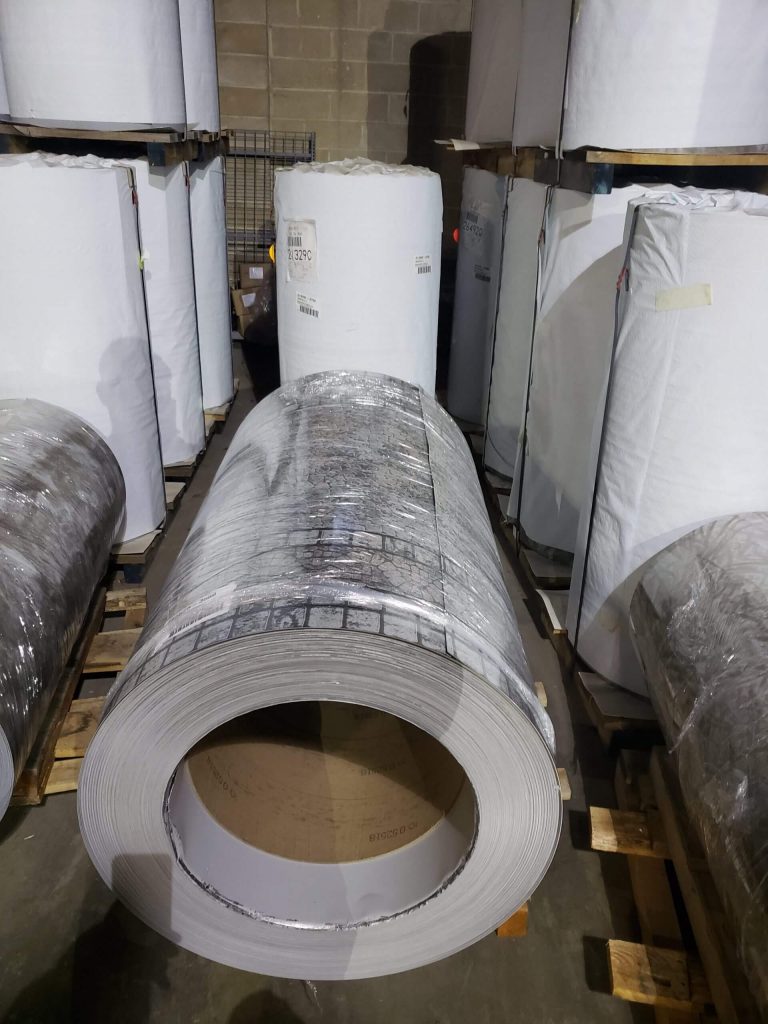
The US market is flooded with above ground pools made from imported steel. This steel is thinner gauge, uses inferior alloys, and gets a minimal protective coating. Here’s what happens:
Year 1: Looks fine. You’re happy. Great summer.
Year 2–3: You notice some discoloration around the skimmer area. Maybe a little bubbling on the outside of the wall. Nothing alarming yet, hopefully.
Year 3–5: The bubbling is rust. The skimmer area or more likely the return water hole is soft. You might notice moisture on the outside of the wall that shouldn’t be there. The top rails (if they’re steel) are starting to flake.
Year 5–7: The wall has a hole. The liner is the only thing holding back the water. One hard freeze, one kid bumping the wall, one strong wind — and you’ve got thousands of gallons of water headed wherever gravity takes it. I’ve seen pools fail toward the house, toward the neighbor’s yard, toward the power lines. It’s not pretty.
I have photos of pools I’ve replaced where you could push your finger through the wall at the skimmer. Pools that were less than five years old. Pools that cost $2,000+ from a “reputable” big box store.
The pool I replaced them with? Made from the same grade steel as a pool twice its price from another manufacturer. Because the manufacturer I work with doesn’t cut corners on materials even at their entry-level price point. Sadly, I’ve lost sales because price is perception, even though I have the best wall, people buy a pool not as good for more money.
Problem #2: The Frame
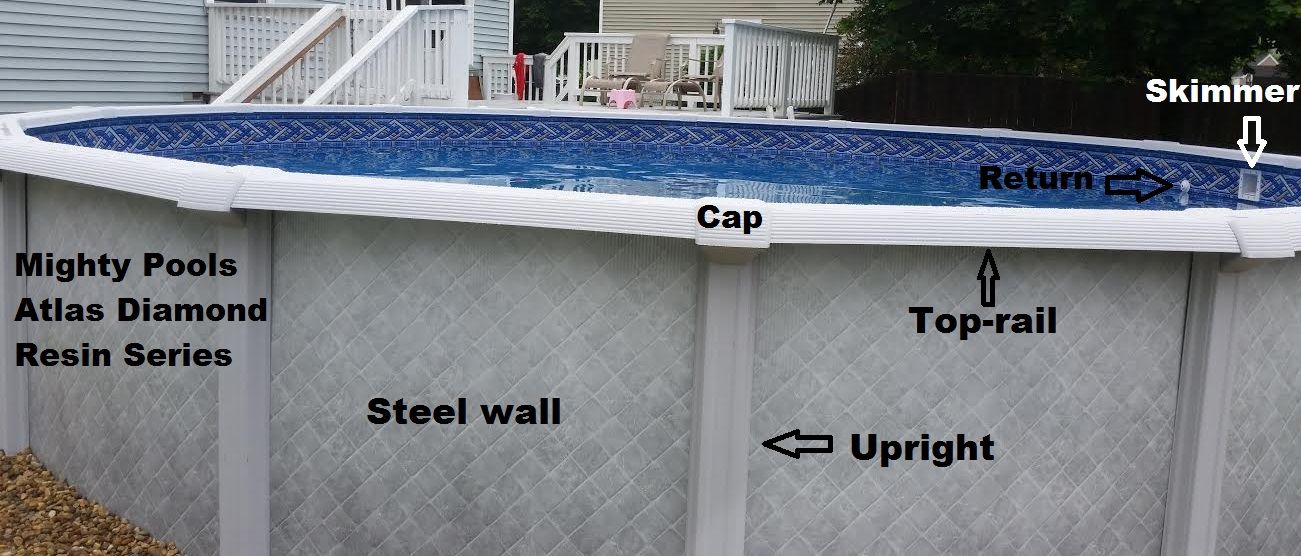
On a cheap pool, the frame is all steel. Top rails, uprights, bottom tracks, connectors — all steel. And they all rust.
Here’s the thing about a rusted pool frame: it doesn’t just look bad. A rusted upright weakens the connection point between the wall and the top rail. A rusted bottom track no longer holds the wall securely in position. These are structural failures that compromise the entire pool.
Resin frames solve this permanently. The pools I sell have extruded resin top rails, uprights, bottom joiners, and caps. There is zero steel in the frame to rust. The resin is UV-resistant, won’t corrode, won’t rot, and will look basically the same in 20 years as it does on day one.
“But resin can crack in cold weather!” — I hear this from the steel frame advocates. In 30+ years and hundreds of installations in New England (where it gets very cold), I have never seen a resin frame crack from weather. Not once. Could it theoretically happen in extreme conditions? Sure. But in the real world, resin frames outlast steel frames by a mile.
Problem #3: The Liner
The liner that comes with a cheap pool is the thinnest material the manufacturer can get away with. Often 12-14 mil, overlap style, single color or basic print.
The problems:
- Thin liners tear easily. Run a brush or a vacuum over a twig on the bottom — done.
- Overlap liners fit poorly. They stretch over the top rail and are held in place by the top caps. They wrinkle, sag, and pull away at the edges. Wrinkles trap dirt and algae and look terrible.
- Cheap liners fade. After one season of sun exposure, that “Caribbean Blue” liner looks like a faded pair of jeans.
What I include instead: Swimline Perma 2500 grade beaded liners. Full-print designs. Approximately 17 mil. Beaded means they snap into a track at the top of the wall — clean, tight, professional-looking. They’ll hold up for 7–12 years with reasonable water chemistry.
Problem #4: The Skimmer Situation
I mentioned this in my budget pool guide, but it bears repeating. The skimmer and return hole are where water passes through the pool wall. All pool factory’s punches a hole in the wall for the skimmer and return, and that’s it. Bare steel exposed to constant water flow. Left unchecked makes a bad situation worse.
It’s the #1 failure point on above ground pools. Bar none.
The pools I sell come with gasket protection at every wall penetration point. It costs the manufacturer a few extra dollars to include them, but adds 10 years to the pool’s life.
What “Quality” Actually Costs
Here’s the part that surprises most people: a quality above ground pool doesn’t cost that much more than a cheap one.
A 24-foot round steel wall pool from a big box store: $2,000–$3,000. Comes with a thin liner, a basic single-speed pump, and steel framing that’ll start rusting by year three.
A 24-foot round Lamark with a quality steel wall, resin frame, full-print beaded liner, and proper skimmer protection: right in that same ballpark. Maybe a few hundred more depending on configuration. But you’re getting a pool that’ll still be standing strong in 15–20 years.
The difference isn’t primarily the price. It’s where the money goes. Cheap pool manufacturers spend money on pretty wall patterns, fancy box packaging, and retail store shelf space. Quality manufacturers spend money on better steel, thicker coatings, resin framing, and construction details that you’ll never see but that determine whether your pool lasts 5 years or 25. My manufacturer actually offers no marketing support and very little materials, all their budget goes into the pools.
What I Sell Now (And What I Don’t)
I don’t sell any pool I wouldn’t put in my own backyard. That’s the rule. That’s been the rule since I went exclusive with Buster Crabbe / Aquasport Pools.
My entry-level pool is the Lamark. It’s available with a steel wall (Lamark Edge) or an aluminum wall (Lamark LASA). Round shapes, 12’–24′, white resin frame. It’s not fancy. It doesn’t have oval options or multiple frame colors. But the construction is identical to the more expensive pools in the lineup — same steel, same frame, same liner quality.
From there, the lineup steps up through the Atlas (rounds and ovals, multiple frame colors), the Dauntless (all-aluminum construction), the Aquasport 52 (the strongest pool on the market — can be installed fully inground without a cement collar), the Fox Ultimate (premium 14 gauge powder coated steel with grecian and rectangle shapes), and the Admiral’s Walk (the Cadillac — interlocking aluminum panels with decks and fencing).
Every single one of them is made in the same factory, by the same people, with the same standards.
I also sell fiberglass pool shells from four manufacturers for contractors and experienced DIYers. And I manufacture my own pool bonding kits — something every pool owner needs for electrical code compliance.
The Real Cost of Cheap
Let me do some quick math that might change how you think about this.
Scenario A: Buy the cheap pool.
- Pool cost: $2,000
- Replacement liner in year 3: $400 + labor $600
- Wall or Frame repairs/replacements in year 4–5: $$1000-$3000
- New pool in year 6–7 because the wall failed: $2,500
- Total over 7 years: ~$5,100–$5,400
Scenario B: Buy the quality pool.
- Pool cost: $2,400
- Replacement liner in year 8–10: $400 + labor
- Total over 15+ years: ~$2,800
Half the money. Twice the lifespan. No emergency pool failures. No frantic shopping in the middle of summer when everything’s backordered.
That’s not a sales pitch. That’s math.
My Promise
I don’t sell garbage pools for the masses at the lowest price. I never have and I never will. Every pool in my lineup is something I would install for my own family.
I don’t have commissioned salespeople. You call me, you get me — Mike Kern, Certified Pool Operator, 30 years in the industry. I’ll tell you which pool makes sense for your yard, your budget, and your family. Sometimes that means I’ll talk you out of a more expensive pool because you don’t need it (maybe you plan to move in 5-7 years). Sometimes it means I’ll tell you the cheapest option isn’t worth it. Either way, you’ll get the truth.
That’s what family-to-family means.
Related Reading
- Best Above Ground Pools (2026) – Rated by a 30-Year Pro
- How Do I Choose the Best Above Ground Pool?
- Winter Damage to Above Ground Pools: Fix It or Buy New?
- The Hudson – New Above Ground Pool Design
- Steel vs Aluminum Pool Wall – Which Is Better?
Browse my complete pool lineup →
Or call / text me directly: (978) 710-8667