
This is probably the most common question I get from pool shoppers: “Should I get a steel wall or an aluminum wall?”
After 30+ years of installing, repairing, replacing, and selling above ground pools, I have a strong opinion on this. But I’m going to give you the full picture first so you can make your own call based on your situation.
Fair warning: a lot of what you’ll read online about this topic is either outdated, oversimplified, or flat-out wrong. Some aluminum pool sellers will tell you steel is garbage that rusts in two years. Some steel advocates will tell you aluminum is flimsy and corrodes just as fast or is “TOO EXPENSIVE“. Neither is true — if you’re buying quality.
Let me break it down the way I’d explain it to a friend over a cup of coffee. If your looking for the best brand and top rated pools of 2026 when your done here – Check out this article
First, Let’s Clear Up a Huge Misconception
When people say “aluminum pool” or “steel pool,” they’re almost always talking about the pool wall only. The wall is the big cylindrical (or oval) structure that holds back all the water. It’s the most important structural component of the pool.
The rest of the pool — top rails, uprights, bottom tracks, connectors, caps — is the frame. The frame can be made of steel, aluminum, resin (heavy-duty plastic), or a combination. Most quality pools today use resin framing regardless of wall type, because resin won’t rust or corrode, chip, peal or dent.
So the real question isn’t “steel pool vs. aluminum pool.” It’s “steel wall vs. aluminum wall — with everything else being equal.”
Got it? Good. Let’s dig in.
The Case for Steel Walls
Strength and Rigidity
Steel is stronger than aluminum. Full stop. A steel wall resists deformation better, holds its shape under water pressure more reliably, and is more forgiving during installation.
When I’m setting a pool wall in a customer’s backyard, a steel wall is easier to work with. It stays where I put it. It doesn’t flex as much in the wind during setup. It holds the circular shape better while I’m attaching the bottom track and getting everything plumb.
An aluminum wall, by comparison, is lighter and more flexible. That sounds like a good thing — until you’re trying to keep it from blowing over on a windy day during installation, or trying to prevent crease marks while you’re unrolling it. Aluminum walls require more care during the build.
Cost
Steel is less expensive. Depending on the pool size, going from a steel wall to an aluminum wall will typically add $200–$500 to the price. On a budget pool, that’s significant. On a $6,000+ premium pool, it’s less of a factor.
Quality Steel ≠ Cheap Steel
Here’s where it gets important. Not all steel is created equal, and this is where a lot of pool shoppers get burned.
Quality steel walls (what I sell) use:
- US-manufactured copper-bearing steel
- G90 hot-dipped galvanized coating (thick zinc layer)
- Epoxy coating on the interior wall surface
- Deep corrugation for structural rigidity
- Gasket protection at the skimmer and return cutouts
Cheap steel walls (what you find at big box stores) use:
- Imported steel, often from overseas with thinner gauge
- Minimal galvanized coating
- No interior epoxy
- Shallow or no corrugation
- Exposed bare steel at cutout points
The difference in lifespan? A quality steel wall pool will last 20–35 years with proper water chemistry. A cheap steel wall pool might give you 3–9 years before you’re looking at rust holes.
When someone tells me “steel pools rust,” I ask them what kind of steel they’re talking about. It’s like saying “cars break down” — well yeah, a 1998 Kia with 200,000 miles might. A well-maintained Honda Civic will run forever.
The Case for Aluminum Walls
Corrosion Resistance
Aluminum doesn’t rust. Period. When exposed to air, aluminum forms a thin, transparent layer of aluminum oxide on its surface that acts as a natural barrier against further corrosion. This is the single biggest advantage of aluminum walls.
In practice, this means:
- No rust stains on your patio or deck from drip lines
- No panic if you scratch the wall during installation
- Better longevity in coastal or high-humidity environments
- Less worry about water chemistry affecting the wall
Longevity
All else being equal, an aluminum wall will generally outlast a steel wall. The common industry estimate is that aluminum pools last 2–3 times longer than steel pools of comparable quality. I’ve seen steel wall pools last 20 years and aluminum wall pools go 30+.
But here’s the asterisk: that comparison assumes similar quality levels. A premium steel wall pool with proper coatings will outlast a cheap aluminum wall pool. Quality matters more than material choice. As far as I know, and I’ve been a dealer for all manufactures of above ground pools, only High-end Doughboy pools, and my manufacturer use the best US American Steel.
Thickness
Aluminum walls are made thicker than steel walls to compensate for aluminum being a softer metal. My aluminum walls are almost twice as thick as my steel walls. The result is a wall that’s just as strong as steel (some would argue stronger) while being corrosion-proof.
The 5052 H34 marine-grade aluminum alloy used in quality pool walls is the same type of aluminum used in marine applications. It’s specifically designed to handle constant moisture exposure.
Now the Honest Downsides
Aluminum CAN Corrode
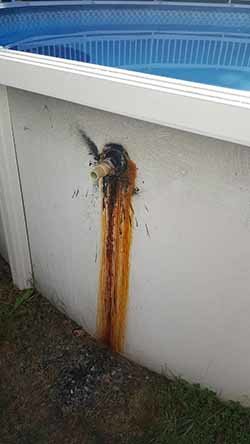
Wait — didn’t I just say aluminum doesn’t rust? It doesn’t. But it can corrode under specific conditions. Aluminum corrosion looks different from steel rust. Instead of the big orange flaky patches you see on rusted steel, corroded aluminum develops tiny white pinholes called pitting.
This typically happens when:
- Pool water chemistry is severely out of balance (very low pH for extended periods)
- Saltwater systems are used improperly (*cough – or at all)
- Dissimilar metals are in contact without proper bonding (galvanic corrosion)
- The pool is in an environment with high chemical exposure (i.e. limestone – pretty white rocks)
In 30 years, I’ve seen far fewer aluminum wall failures than steel wall failures. But saying aluminum is “corrosion-proof” isn’t accurate. It’s corrosion-resistant, and significantly more so than steel.
Aluminum Is More Expensive
No way around this. You’re paying a premium for the corrosion resistance. On my entry-level pools, the aluminum upgrade adds $200–$400 depending on the size. On larger or premium models, the gap can be wider. I double dare you to comparison shop my aluminum pools.
Aluminum Requires More Installation Care
Professional installers know this, but if you’re DIY-ing your pool, be aware: aluminum walls are more prone to getting creased or bent during installation because they’re lighter. A crease in your wall won’t cause a structural failure, but it’s cosmetic damage that won’t come out. Take your time, have helpers, and don’t set up on a windy day.
The Stainless Steel Panel Issue
Here’s something most pool shoppers never hear about, and it’s important.
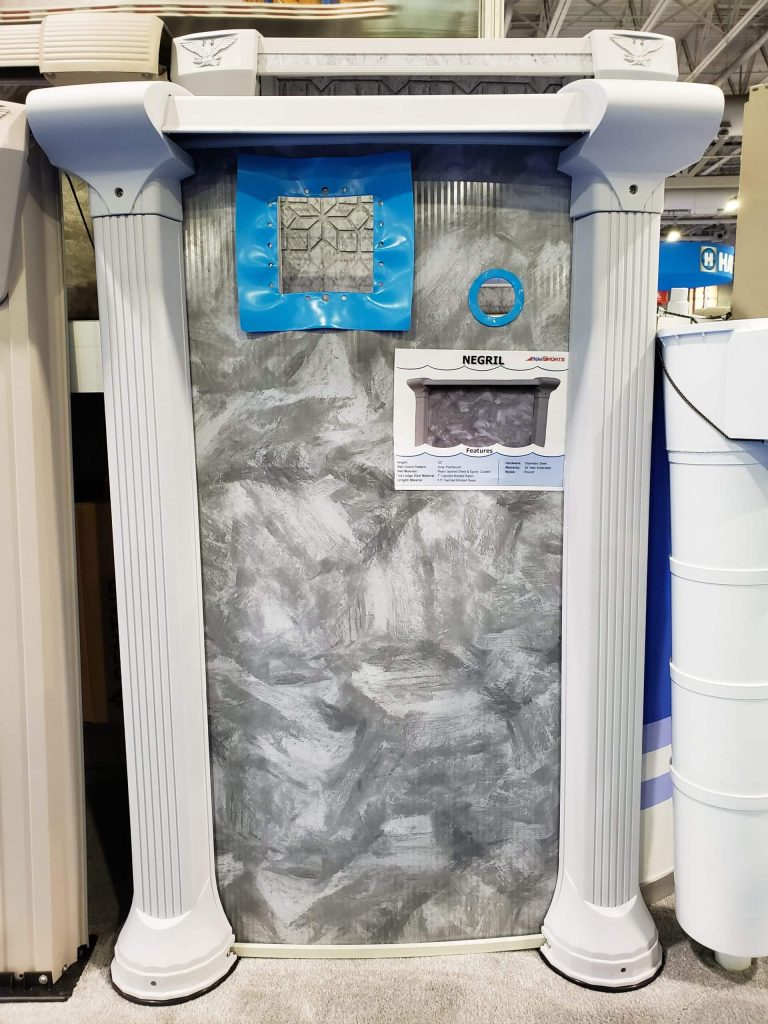
On steel wall pools, the area around the skimmer and return — where water constantly passes through the wall — is the most vulnerable to corrosion. Quality manufacturers address this with gaskets, epoxy, and sometimes a stainless steel service panel in that section. Even this panel made of a different, corrosion-resistant steel that supposedly won’t rot even with constant water exposure, DOES.
Aluminum wall pools typically don’t come with stainless steel service panels because the assumption is “aluminum doesn’t corrode.” But as I mentioned, it can — and the skimmer area is where it’s most likely to happen because of the constant water flow and chemical exposure.
My Recommendation
Here’s my honest advice after 30 years:
Choose steel if:
- You’re budget-conscious and want the most pool for your money
- You’re buying a quality pool with proper G90 galvanized coating (not big-box store thin steel)
- You’ll maintain reasonable water chemistry (you should do this regardless)
- You’re in a standard suburban environment (not coastal, below the countries rust belt.)
- You want a wall that’s easier to work with during installation
Choose aluminum if:
- You live near the ocean or in a high-humidity climate
- You plan to run a saltwater chlorine generator (would void our warranty)
- You want maximum longevity and are willing to pay the extra
- You’re the type of person who wants to buy something once and not think about it again
- Your budget allows for the upgrade without sacrificing pump and filter quality
The one thing I wouldn’t do: Don’t buy a cheap aluminum wall pool thinking it’s automatically better than a quality steel wall pool. A well-made steel pool with proper coatings will outperform a poorly-made aluminum pool every time. The material matters less than the manufacturer’s quality standards.
What About Resin Walls?
I hear this question occasionally. As of right now, there’s no such thing as a practical resin pool wall for permanent above ground pools. The wall needs to hold back thousands of gallons of water — that requires metal. Resin is great for the frame, but it’s not structurally capable of being a pool wall (at least not yet).
When you see a pool advertised as “all resin,” it means the frame is all resin. The wall is still steel or aluminum.
There are new fiberglass above ground pools now, but if you don’t like the upgrade cost of aluminum, shield your eyes, as those fiberglass pools cost 4x as much.
What I Sell
I offer both options on my entry-level pool (the Lamark):
Lamark Edge = Steel wall version. American G90 galvanized steel, epoxy interior coating, full resin frame. Best value for most buyers.
Lamark LASA = Aluminum wall version. 5052 H34 marine-grade aluminum (.027″ thick), full resin frame. “LASA” comes from LAmark + NASA-grade aluminum. Premium option for buyers who want maximum corrosion protection.
Both use the same resin frame, the same full-print beaded liner, and the same hardware. The only difference is the wall material.
Compare the full Lamark lineup here →
For my mid-tier and premium pools (Atlas, Dauntless, Aquasport 52), the aluminum upgrade is available across the board. The Dauntless is actually aluminum-only — it’s designed as the aluminum premium option without a steel version.
Frequently Asked Questions
Q: Can I use a saltwater system with a steel wall pool?
A: I wouldn’t use a salt system on any metal wall pool except one, the Fox Ultimate. There is no escaping the FACT that salt is aggressive towards all metals. In my opinion its reckless or ignorant at best, and more likely dishonest to advertise a salt water above ground pool. I think you’ll agree once you read the fine print on your pool warranty.
Q: Which has a better Warranty: Steel or Aluminum?
A: Warranties in the pool industry are not worth the paper they are printed on. Most pool walls both steel and aluminum are pro-rated by 50% after just two years! What that means is, after two years you have to pay 50% of the pool wall cost, all of the shipping cost, for a new liner which you will need. None cover the labor to remove your pool and rebuild it. Humble Brag: While most pool builders only offer 1 year for a workmanship warranty, we offer 5 years. Why? How can I afford this? Because I only sell and install good pools.
Q: How do I maintain a steel wall pool to prevent rust?
A: First, understand that all manufacturers treat, coat and paint there pool walls, THEN, they knock out openings for the skimmer and return exposing the raw metal. If you have a hayward skimmer they provide a wall saver gasket for the skimmer. Nobody except my manufacture supplies a wall saver gasket for the round return hole. If you don’t buy a pool from me, get some enamel paint (fingernail polish) and paint the raw metal edge.
Keep your water chemistry balanced — especially pH (7.2–7.6) and alkalinity (80–120 ppm). Don’t let water sit against the outside wall (think drainage with river rock), also, keep landscaping away from the base. Touch up any exterior scratches with enamel paint. If the mower kicks a rock off your steel wall pool, get after it. If you read the owner manual which nobody does, they recommend waxing your pool wall every year like you would a new car.
Q: Is aluminum lighter? Does that matter?
A: Yes, aluminum is significantly lighter. This makes shipping slightly cheaper in some cases and makes it a bit easier to handle the wall during delivery. During installation, the lighter weight is a trade-off — easier to carry but harder to control in the wind. I’ve seen the old Ester Williams Pools that are like my Aquasport 52 last 45 years.
The Real Answer
Here’s what I tell every customer who asks me this question:
I talk to people all the time who thought they bought a pool that would last 30+ years, and they collapsed in 9, or worse 3 years. I knew one guy who was on his third Namco wall, he called me to install it. He kept paying for the freight, liner, and labor because they gave him a free wall???
I know the poolfactory.com has cheaper pools than me by like 300-500 bucks. If I could get my Lamark to cost less I would, it kills me to see people buy a trash can for a pool and a garbage bag for a liner.
The wall metal matters less than the wall quality. A $2,000 pool with a quality American steel wall, proper coatings, and a resin frame will outlast a $3,000 pool with a thin imported aluminum wall and steel framing — every single time.
Buy the best pool you can afford from a manufacturer you trust, with a dealer who’ll answer the phone when you have questions. Whether that wall is steel or aluminum is secondary.
But if you can swing the extra $200–$400 for aluminum? Yeah, I’d do it. It’s cheap insurance.
Mike Kern is the owner of MGK Pools Inc, a Certified Pool Operator with over 30 years in the industry. He ships above ground pools nationwide and offers professional installation in MA, NH, RI, CT, and ME. Call or text (978) 710-8667 for straight talk about pools.